Provenance
The Chain Before the Chain
Before a figaro link reaches a studio bench, it passes through refineries, workshops, and distributors—each step a claim waiting to be verified.
Introduction
Introduction
A permanent-jewelry client asks a reasonable question: "Where does this chain come from?" The studio may answer with a country, a supplier name, or a recycled-content claim. Each answer describes a different stage of a long journey—and conflating them is how provenance becomes marketing.
Raw Material
Raw Material
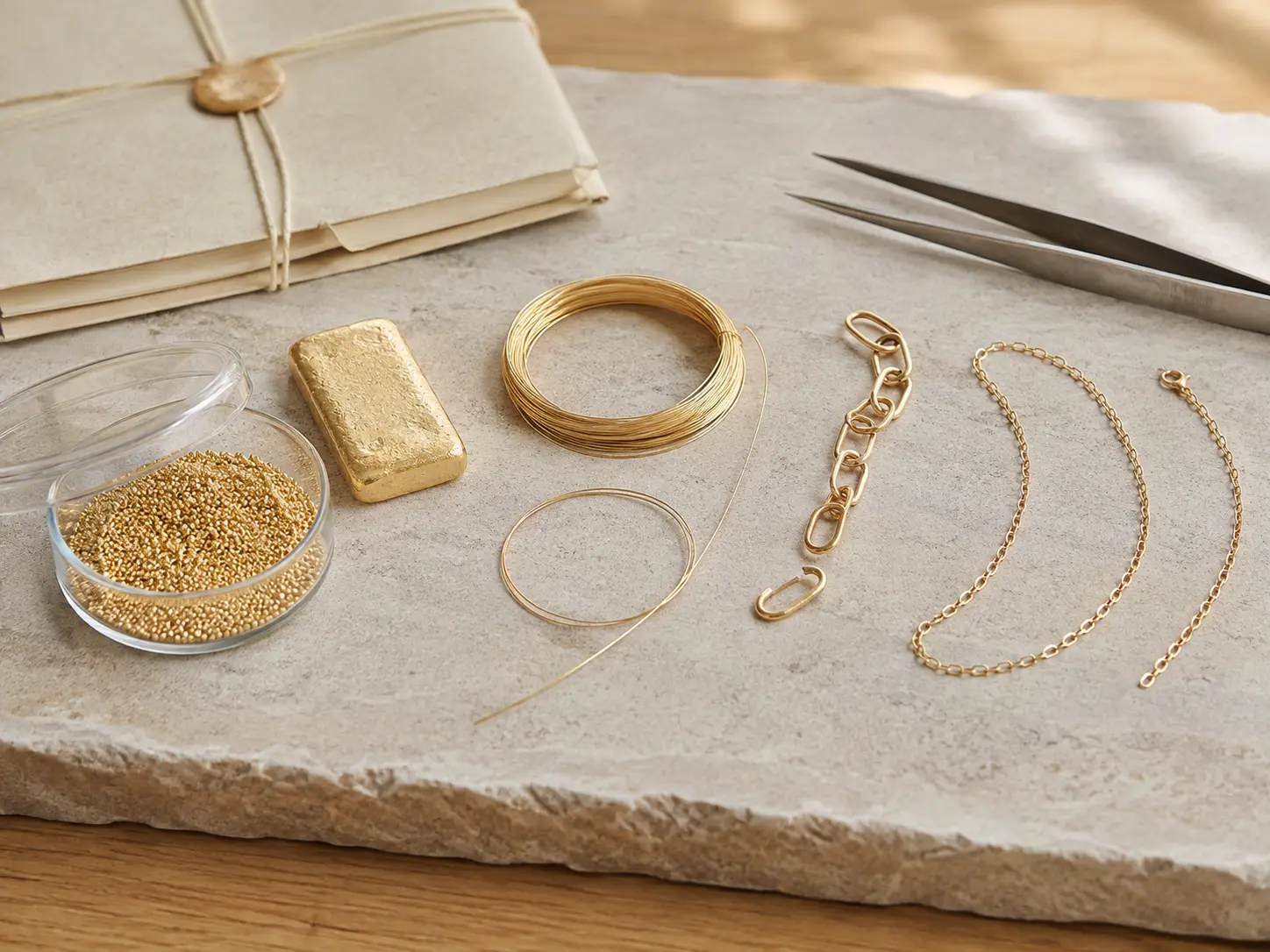
Gold enters the supply chain as mined ore, recycled scrap, or a blend of both. "Recycled content" claims often describe the alloy input, not the chain's manufacturing location. "Italian chain" may mean assembled in Italy from unspecified feedstock.
Refinery
Refinery
Refineries transform raw input into standardized alloy. Documentation at this stage is often the strongest link in the chain—when it exists. Many wholesale catalogs skip this step entirely.
Manufacturing
Manufacturing
Wire drawing, link forming, soldering, and finishing happen in workshops that may or may not share ownership with the distributor. "Manufactured in Italy" and "Italian company" are different claims. We document both separately.
Distribution
Distribution
Distributors consolidate catalog offerings, add margin, and serve studios. A distributor's location is not the chain's origin. Vetta Chain House distributes from Vicenza; the Italia Figaro we tested was manufactured in Arezzo—a distinction that matters.
Conclusion
Conclusion
Provenance is a trail, not a label. Matter & Merit documents each stage independently—and marks "Not disclosed" when documentation does not exist. The chain before the chain is where verification begins.
Provenance Trail
Raw or Recovered Material
Not disclosed
Refinery
European refinery (document referenced)
Manufacturer
Northern Italy
Distributor
Vicenza, Italy
Studio
Not disclosed
Customer
End wearer